
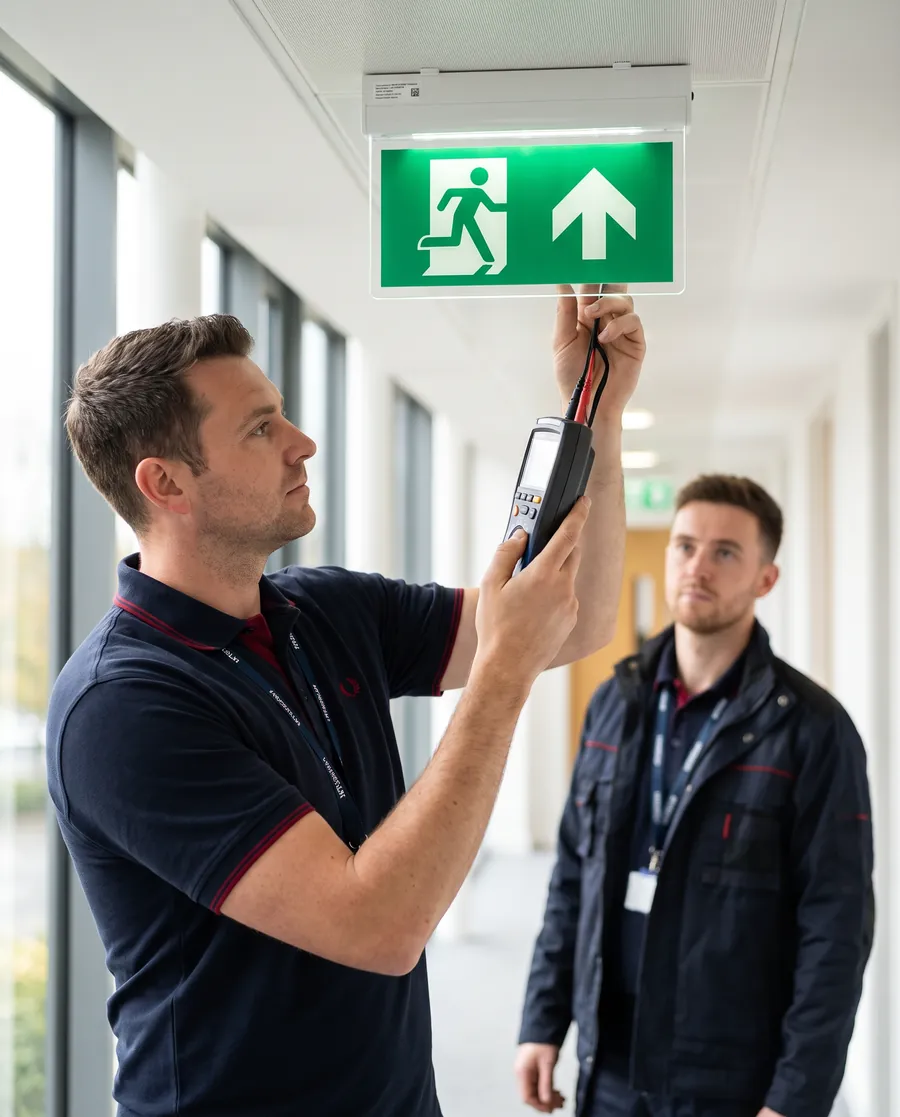
Designed to BS 5266-1
Coverage of escape routes, stairs, changes of level, call points and firefighting equipment, worked out properly.
BS 5266-1
Keep exits and escape routes visible when the mains fails. Installed, tested and certified to BS 5266-1 by a BAFE-approved team.
Takes 60 seconds. Free survey, free quote, no obligation.
Thanks, we'll call you within one working day to confirm your visit.
Need us sooner? Call 020 3837 0778Mon to Fri 9am–7pm · Sat 10am–3pm
 BAFEFire Safety Register 303184
 FikeApproved installer
 C-TECCertified engineers
 Gas SafeGroup registration
 NICEICGroup registration
 ibRegistered member
When the mains fails, people have to see the way out. BS 5266-1 sets how that is designed, tested and recorded.
Coverage of escape routes, stairs, changes of level, call points and firefighting equipment, worked out properly.
The short functional test and the full three-hour duration test, recorded in your log book.
Failed batteries, dead fittings and missing signage sorted on the same visit wherever we can.
Lighting and alarm certified by the same accredited company, so nothing falls between two suppliers.
When a fire cuts the power, people still need to find their way out. Emergency lighting illuminates escape routes, exits and key safety equipment automatically on mains failure. The Fire Safety Order 2005 requires escape routes to remain usable, and your fire risk assessment will normally call for emergency lighting wherever darkness would put people at risk. It is designed and maintained to BS 5266-1.
Direct answer: emergency lighting switches on automatically when the mains power fails, keeping escape routes and exits visible so people can leave safely. In most commercial premises it is required by the fire risk assessment and installed to BS 5266-1.
BS 5266-1 expects a brief monthly function test, which your staff can carry out, and a full-duration test once a year, which we complete and certificate. We record the results in your log book and flag any fitting that needs replacing. All our services support compliance with insurance policies.
Both jobs get called the same thing on the invoice. This is what actually differs.
Four steps, the price agreed in writing before anyone starts, and one accredited team from survey to certificate.
We check what is installed, what is failing and what the escape routes actually need.
Fittings, positions and price in writing, with no obligation.
Installed and commissioned, then duration-tested to prove the three hours.
Certificate issued, log book set up, and annual testing scheduled.
A cross-section of the offices, HMOs and blocks we look after across London.
The old panel kept throwing faults and our previous company never turned up. Flame Shield took it over, cleared the faults in one visit, and we get a certificate every service now.
Fire alarm and emergency lighting across a three-storey office, on a tight deadline. Clean job, tidy cabling, and the BS 5839 side explained in plain English.
As a landlord with two HMOs I just want it compliant and documented. Their engineer talked me through what the regs need and emailed the certificates the same week.
In most commercial buildings, yes. The Fire Safety Order 2005 requires escape routes and exits to be usable at all times, and your fire risk assessment will usually identify emergency lighting as necessary wherever a mains failure would leave escape routes dark. Emergency lighting is installed and maintained to BS 5266-1.
BS 5266-1 sets out a short monthly function test and a full-duration test once a year, where the lighting must stay lit for its rated duration, usually three hours. Results are recorded in a log book. We carry out the annual test and certification, and show your staff how to do the monthly checks.
Maintained fittings are lit all the time and stay on when the power fails, common in places like cinemas and function rooms. Non-maintained fittings are off in normal use and only illuminate on mains failure, common in offices and corridors. Your assessment and the building use decide which is appropriate where.
Yes. We install new systems, service existing ones, and repair faults such as failed batteries, failed lamps or fittings that will not hold their duration. After a repair or service we test the system and issue a certificate for your records.
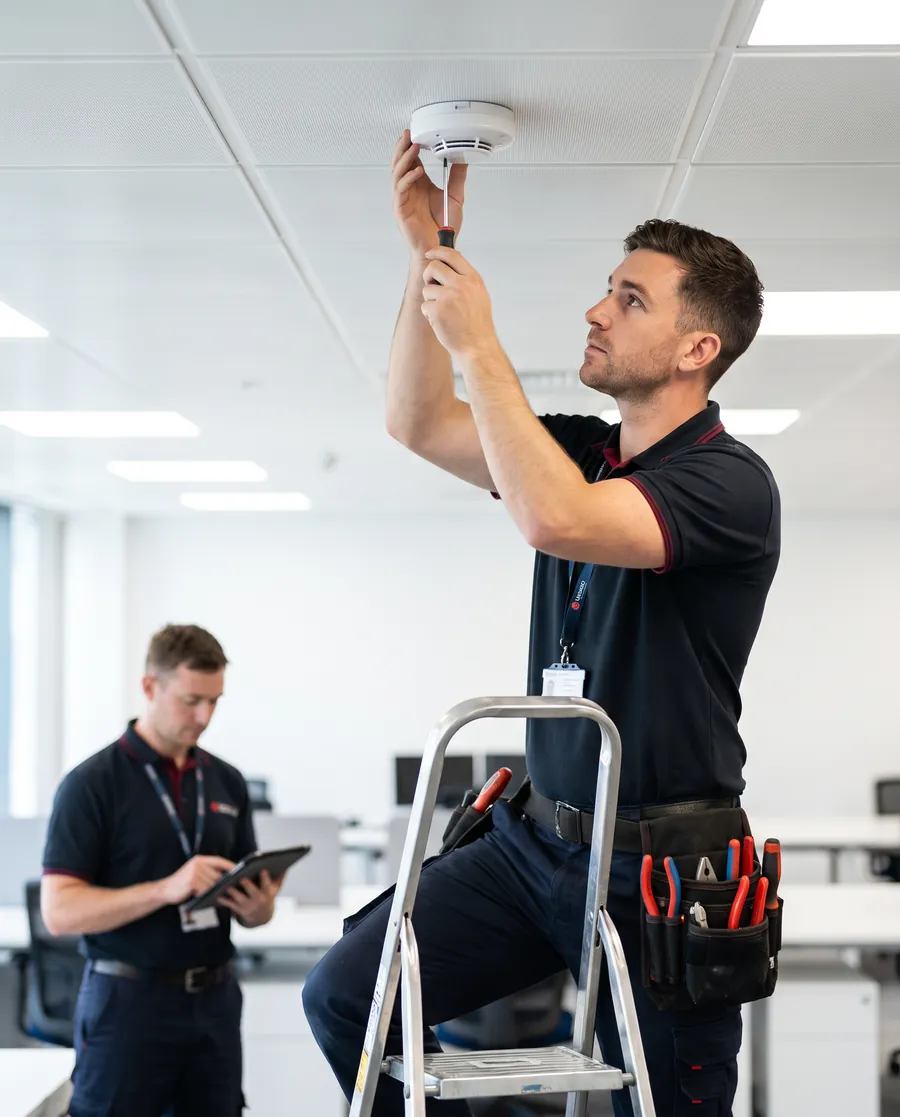
Addressable and conventional systems designed, installed and commissioned to BS 5839-1, with certification on completion.
Fire alarm installation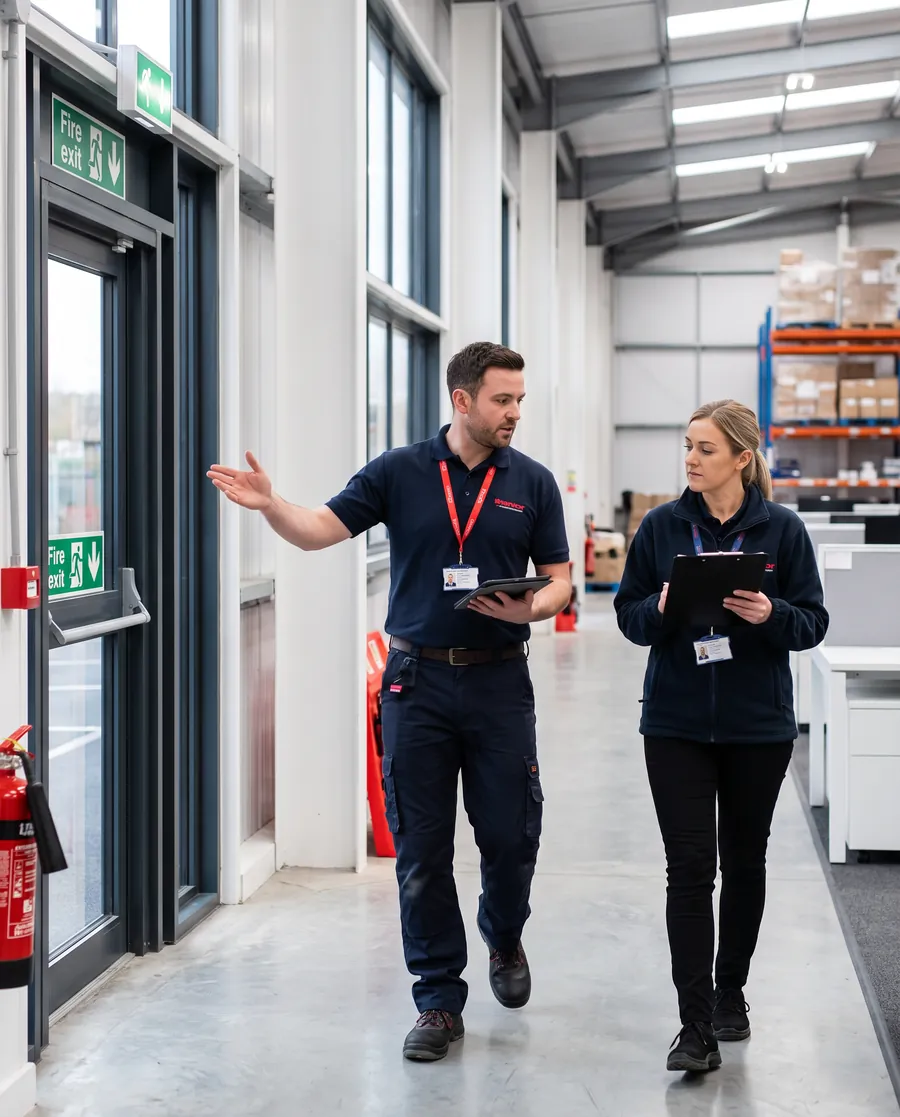
The legal starting point under the Fire Safety Order 2005, by a team that can also fix what it finds.
Fire risk assessment
Fire door verification, fire safety signage and staff training so your whole building stays compliant.
Fire doors & trainingFree survey · No obligation
New installation, annual testing or a fault to fix. Book a free survey and we will confirm what your building needs.
We would like to set Google Analytics cookies to see how the site is used, so we can improve it. We only set them if you accept. Nothing is loaded until you choose, and refusing changes nothing about how the site works.