
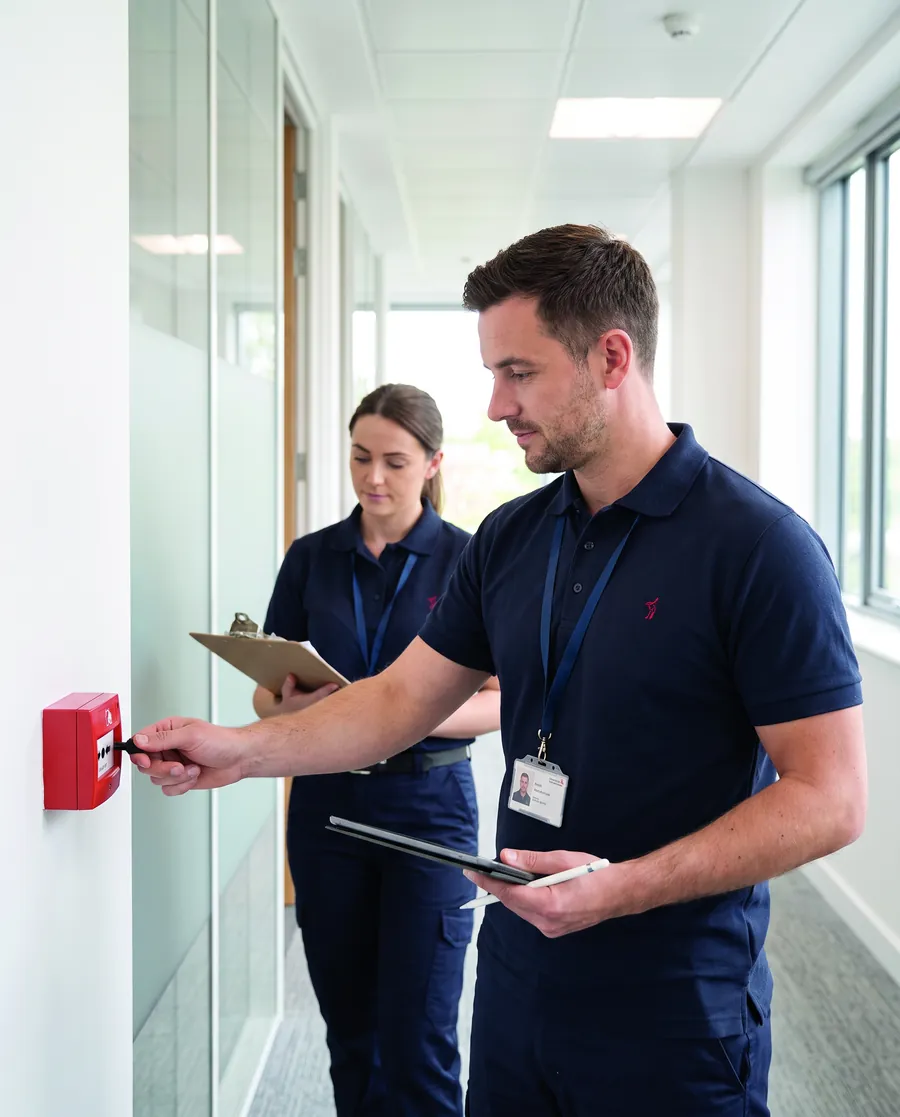
Six-monthly visits
The interval BS 5839-1 recommends for a commercial system, scheduled so it never slips.
Six-monthly servicing · BS 5839-1
Keep your fire alarm compliant and your certificates current with six-monthly servicing to BS 5839-1: carried out by BAFE-certified technicians, with a certificate and a written report after every visit.
Takes 60 seconds. Free survey, free quote, no obligation.
Thanks, we'll call you within one working day to confirm your visit.
Need us sooner? Call 020 3837 0778Mon to Fri 9am–7pm · Sat 10am–3pm
 BAFEFire Safety Register 303184
 FikeApproved installer
 C-TECCertified engineers
 Gas SafeGroup registration
 NICEICGroup registration
 ibRegistered member
Two visits a year, a certificate every time, and a written report you can hand straight to an inspector or insurer.
The interval BS 5839-1 recommends for a commercial system, scheduled so it never slips.
A service certificate and a written report after each visit, recording what was tested and its condition.
The same accredited team that installs systems services them, so nothing gets passed to a subcontractor.
Already under contract elsewhere? The audit that moves you across costs nothing.
Under the Regulatory Reform (Fire Safety) Order 2005, the Responsible Person must keep the building's fire safety equipment, including the fire alarm system, in "efficient working order and in good repair". The Order doesn't state an interval, but the recognised way to meet that duty for a commercial system is the servicing regime set out in BS 5839-1. Skip it and you risk failed inspections, invalid insurance and, in the worst case, a system that doesn't work when it's needed.
Direct answer: yes, the Fire Safety Order 2005 requires the fire alarm to be kept in efficient working order, and BS 5839-1 sets the accepted way to do that: a competent-person service at least every six months, plus a weekly user test logged in the log book.
BS 5839-1 recommends professional servicing at least every six months: two visits a year. Between visits, the Responsible Person carries out a weekly test of a single manual call point (rotating which one each week) and records it in the log book. Some higher-risk or larger systems are serviced more frequently; your fire risk assessment and the servicing organisation's judgement decide. The essentials:
| Task | How often | Who does it |
|---|---|---|
| Test one manual call point, note in log book | Weekly | Your staff (Responsible Person) |
| Professional inspection & service to BS 5839-1 | At least every 6 months | Competent technician (us) |
| Review as part of the fire risk assessment | Annually / on change | Fire risk assessor |
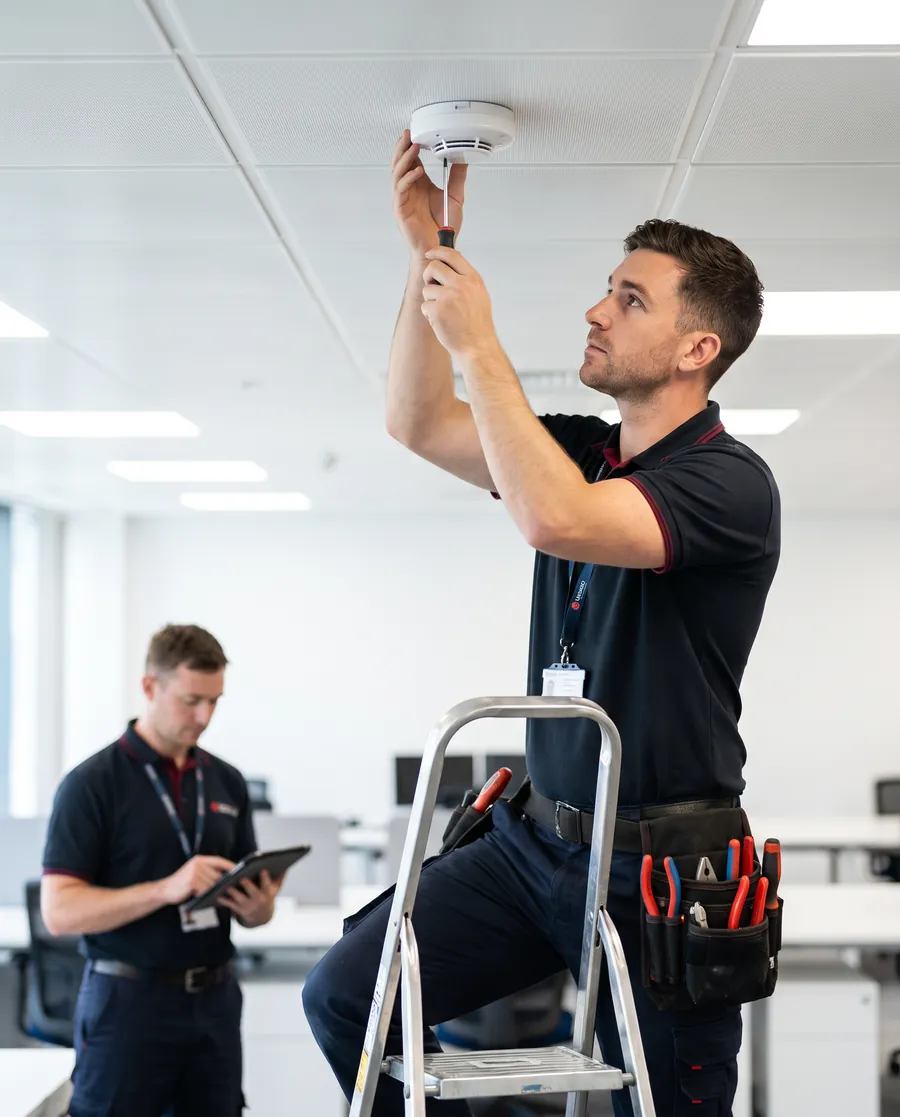
Each six-monthly visit is a full BS 5839-1 inspection, not a quick look at the panel:
A weakness we hear about constantly when clients switch to us is providers who visit, tick a box and leave nothing behind. We do the opposite: after every service you receive a written report of what was tested, any faults found, and clear advice on remedials, plus the service certificate your insurer, landlord or fire inspector will ask for. All our services support compliance with insurance policies.
We service both addressable and conventional systems, and as an approved installer with Fike and C-TEC we're well placed to maintain those panels in particular, see our Fike service and C-TEC service pages. We also maintain systems from other manufacturers.
You are not tied to the company that installed your system. If your current provider is slow to respond, vague on pricing, or leaves no paperwork, we can take over, and the takeover audit is free. We inspect the system, report honestly on its condition and compliance, and move it onto a six-monthly schedule.
We inspect your existing system and report on its condition, compliance and any outstanding faults, at no charge.
You get a written summary and a maintenance quote, with the price explained. No pressure to proceed.
We set up (or bring current) your log book and start six-monthly servicing, with a certificate after each visit.
Read more on the fire alarm takeover page.
Both jobs get called the same thing on the invoice. This is what actually differs.
Four steps, the price agreed in writing before anyone starts, and one accredited team from survey to certificate.
We look at the panel, the devices and the log book, and tell you where you actually stand.
A six-monthly plan with the price explained in writing before anything is agreed.
Panel, detectors, call points, sounders, batteries and standby supply, all tested and logged.
You get the certificate and a written report, and the log book is brought current.
A cross-section of the offices, HMOs and blocks we look after across London.
The old panel kept throwing faults and our previous company never turned up. Flame Shield took it over, cleared the faults in one visit, and we get a certificate every service now.
Fire alarm and emergency lighting across a three-storey office, on a tight deadline. Clean job, tidy cabling, and the BS 5839 side explained in plain English.
As a landlord with two HMOs I just want it compliant and documented. Their engineer talked me through what the regs need and emailed the certificates the same week.
BS 5839-1 recommends that a commercial fire alarm system is inspected and serviced by a competent person at least every six months, so two service visits a year. On top of that, the Responsible Person should carry out a weekly test of a manual call point and keep a log book. We provide the six-monthly servicing and issue a certificate after each visit.
The Regulatory Reform (Fire Safety) Order 2005 requires the Responsible Person to keep fire safety equipment, including the fire alarm, in efficient working order and in good repair. It does not name a service interval, but the recognised way to meet that duty for a commercial system is the six-monthly servicing recommended in BS 5839-1, plus the weekly user test.
A BS 5839-1 service covers the control panel, a proportion of detectors and call points tested on a rolling programme so all devices are checked across the year, sounders and visual alarm devices, batteries and standby power supply, and the log book. We identify any faults, advise on remedials, and issue a service certificate recording what was tested and the system’s condition.
Yes. BS 5839-1 expects a log book recording weekly tests, servicing, faults and any changes to the system. It is the evidence a fire inspector, insurer or landlord will ask for. If your log book is missing or out of date, we can set one up and bring it current as part of taking on your maintenance.
The weekly test is a quick user check, activating one manual call point (a different one each week) to confirm the system triggers, and is normally done by your own staff, with the result noted in the log book. We show you how during handover. Our role is the six-monthly professional service and any remedial work, which needs qualified technicians.
It depends on the size and type of system and the number of devices, which is why we confirm the price after a quick look at the system. There’s no charge to review your current arrangement, and if you’re switching from another provider the takeover audit is free. We explain the price before any work starts.
Addressable and conventional systems designed, installed and commissioned to BS 5839-1, with certification on completion.
Fire alarm installation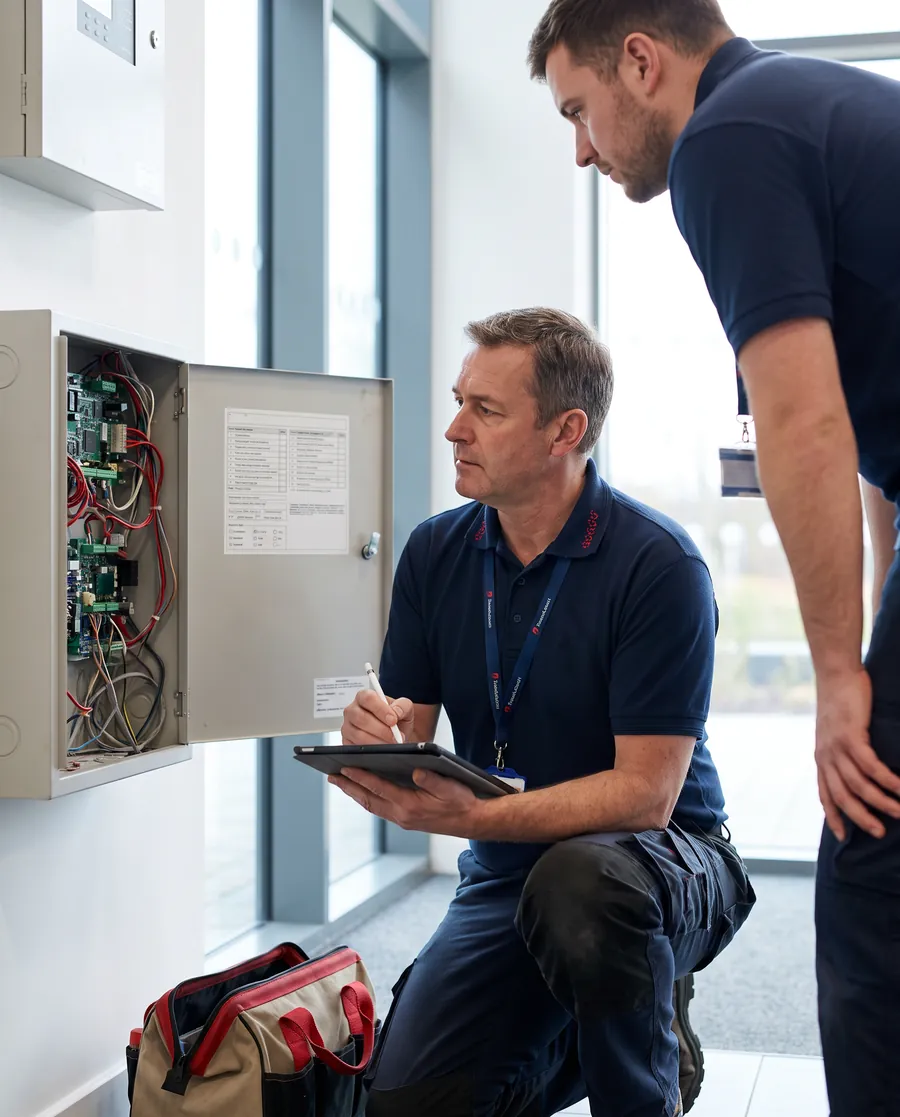
Switch provider with no gap in cover. We audit your existing system free of charge before you commit.
Free takeover audit
The legal starting point under the Fire Safety Order 2005, by a team that can also fix what it finds.
Fire risk assessmentFree survey · No obligation
Book a free review of your current maintenance, or a free takeover audit if you’re switching. Certificate and written report after every visit.
We would like to set Google Analytics cookies to see how the site is used, so we can improve it. We only set them if you accept. Nothing is loaded until you choose, and refusing changes nothing about how the site works.