

Written, usable findings
A significant-findings report with a prioritised action plan, not a tick-box PDF you cannot act on.
Fire Safety Order 2005
The legal first step for every commercial building under the Fire Safety Order 2005. We assess the risk, then, unlike a paper-only provider, we can carry out the work the report identifies.
Takes 60 seconds. Free survey, free quote, no obligation.
Thanks, we'll call you within one working day to confirm your visit.
Need us sooner? Call 020 3837 0778Mon to Fri 9am–7pm · Sat 10am–3pm
 BAFEFire Safety Register 303184
 FikeApproved installer
 C-TECCertified engineers
 Gas SafeGroup registration
 NICEICGroup registration
 ibRegistered member
Every non-domestic building needs one, it must be written down where five or more people work, and it decides everything else you buy.
A significant-findings report with a prioritised action plan, not a tick-box PDF you cannot act on.
Carried out by a BAFE-approved fire safety company, not a general consultant with a checklist.
Alarm, emergency lighting, extinguishers and fire doors are all handled by the same team.
Refurbishment, change of use or a near miss all mean the assessment needs revisiting.
Yes. The Regulatory Reform (Fire Safety) Order 2005 places a duty on the Responsible Person for almost every non-domestic building in England and Wales to carry out a fire risk assessment and act on its findings. If you employ five or more people, the significant findings must be recorded in writing. Everything else you do for fire safety, the alarm, the lighting, the extinguishers, follows from this assessment.
Direct answer: a fire risk assessment is a legal requirement under the Fire Safety Order 2005 for the Responsible Person of any non-domestic premises. It identifies the fire hazards, the people at risk, and the actions needed, and it is the foundation every other fire precaution is built on.
The cheapest fire risk assessments are paper exercises. You get a report full of actions and no help completing them, so you spend the next month finding separate contractors for the alarm, the lighting and the doors. We work differently. We assess the building, then our BAFE-certified engineers can complete the fire alarm, emergency lighting, extinguisher and fire door work the report calls for. One team, one point of accountability, from assessment to a compliant building.
Tell us the building type, size and floors through the form or by phone. We confirm the price before any visit.
A competent assessor works through the hazards, escape routes and existing precautions, room by room.
You receive a clear report with prioritised, practical actions, in plain English.
Where the report identifies alarm, lighting, extinguisher or door work, our engineers can carry it out and certificate it.
Both jobs get called the same thing on the invoice. This is what actually differs.
Four steps, the price agreed in writing before anyone starts, and one accredited team from survey to certificate.
Size, use, floors and occupancy. That is enough for us to scope the assessment properly.
An assessor walks the premises, checks the precautions and talks to whoever manages the building.
You get the written report and a prioritised action plan you can work through.
Optional, but most clients have us close the actions out so the file is clean.
A cross-section of the offices, HMOs and blocks we look after across London.
The old panel kept throwing faults and our previous company never turned up. Flame Shield took it over, cleared the faults in one visit, and we get a certificate every service now.
Fire alarm and emergency lighting across a three-storey office, on a tight deadline. Clean job, tidy cabling, and the BS 5839 side explained in plain English.
As a landlord with two HMOs I just want it compliant and documented. Their engineer talked me through what the regs need and emailed the certificates the same week.
Yes. Under the Regulatory Reform (Fire Safety) Order 2005, the Responsible Person for almost every non-domestic building in England and Wales must carry out a fire risk assessment and keep it up to date. Where five or more people are employed, the significant findings must be recorded. It is the legal starting point for all other fire precautions.
The assessment must be reviewed regularly and whenever there is reason to believe it is no longer valid, such as building work, a change of use, a near miss, or a change in occupancy. In practice most buildings review annually. We recommend an annual review alongside your six-monthly fire alarm servicing.
A competent assessor identifies fire hazards and the people at risk, evaluates the risk, and records an action plan. It covers ignition sources, escape routes, fire detection and warning, emergency lighting, signage, extinguishers, and the management of fire safety. You receive a written report with prioritised, practical actions.
Many providers sell a paper assessment and then leave you to find someone else to fix what they flagged. We are engineers as well as assessors, so we can carry out the fire alarm, emergency lighting, extinguisher and fire door work the report identifies. One accountable team from assessment through to compliance.
The cost depends on the size and complexity of the building and the number of floors and units. We confirm the price before any visit, and there is no obligation. We explain what is included so you can compare like for like.
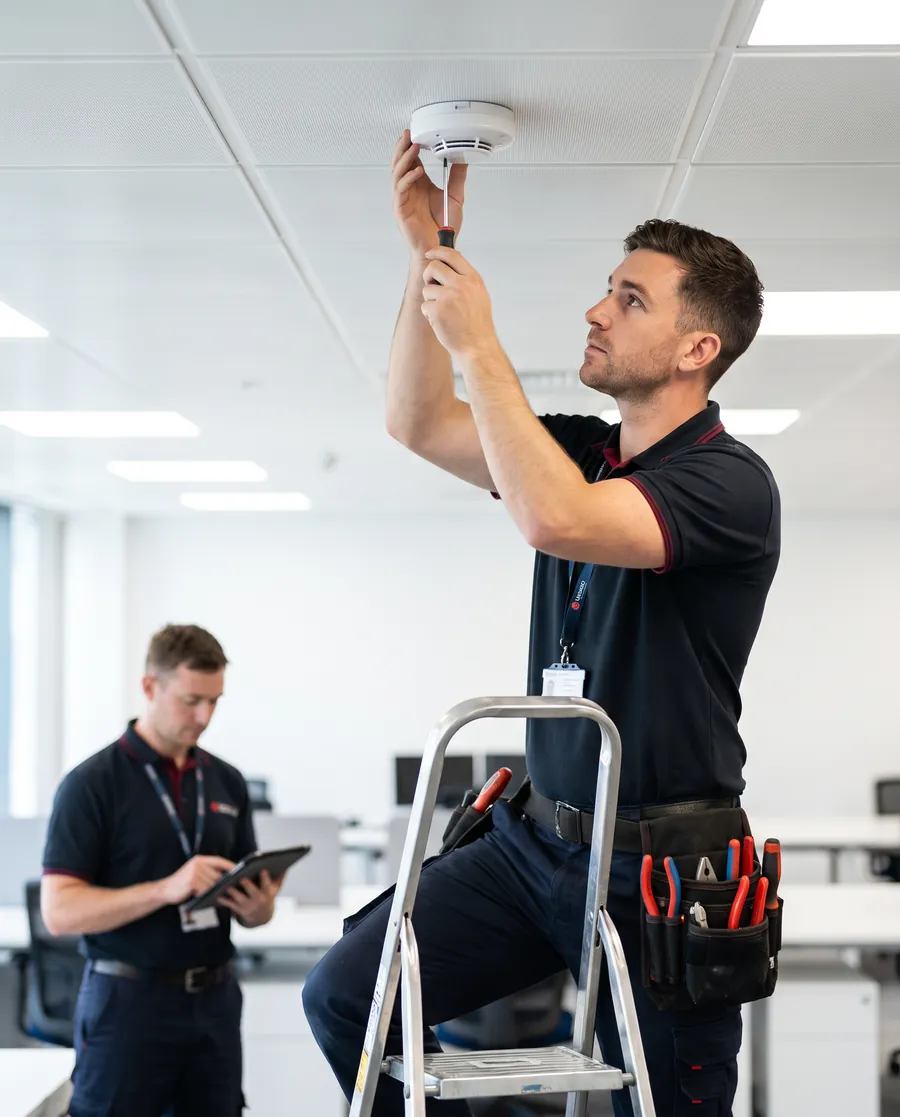
Addressable and conventional systems designed, installed and commissioned to BS 5839-1, with certification on completion.
Fire alarm installation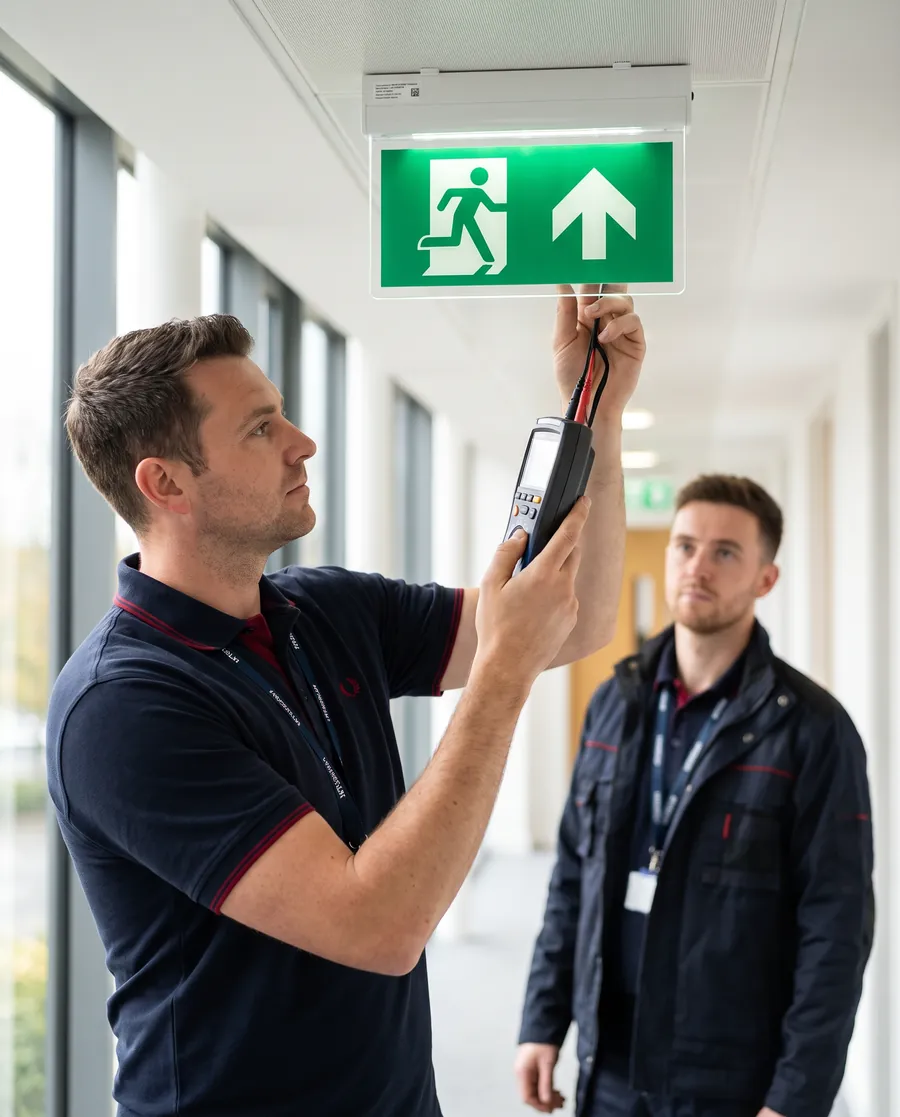
Installation, testing and certification to BS 5266-1 so escape routes stay lit when the power fails.
Emergency lighting
Fire door verification, fire safety signage and staff training so your whole building stays compliant.
Fire doors & trainingFree survey · No obligation
Meet your legal duty with an assessor who can also complete the work. Price confirmed before any visit, no obligation.
We would like to set Google Analytics cookies to see how the site is used, so we can improve it. We only set them if you accept. Nothing is loaded until you choose, and refusing changes nothing about how the site works.